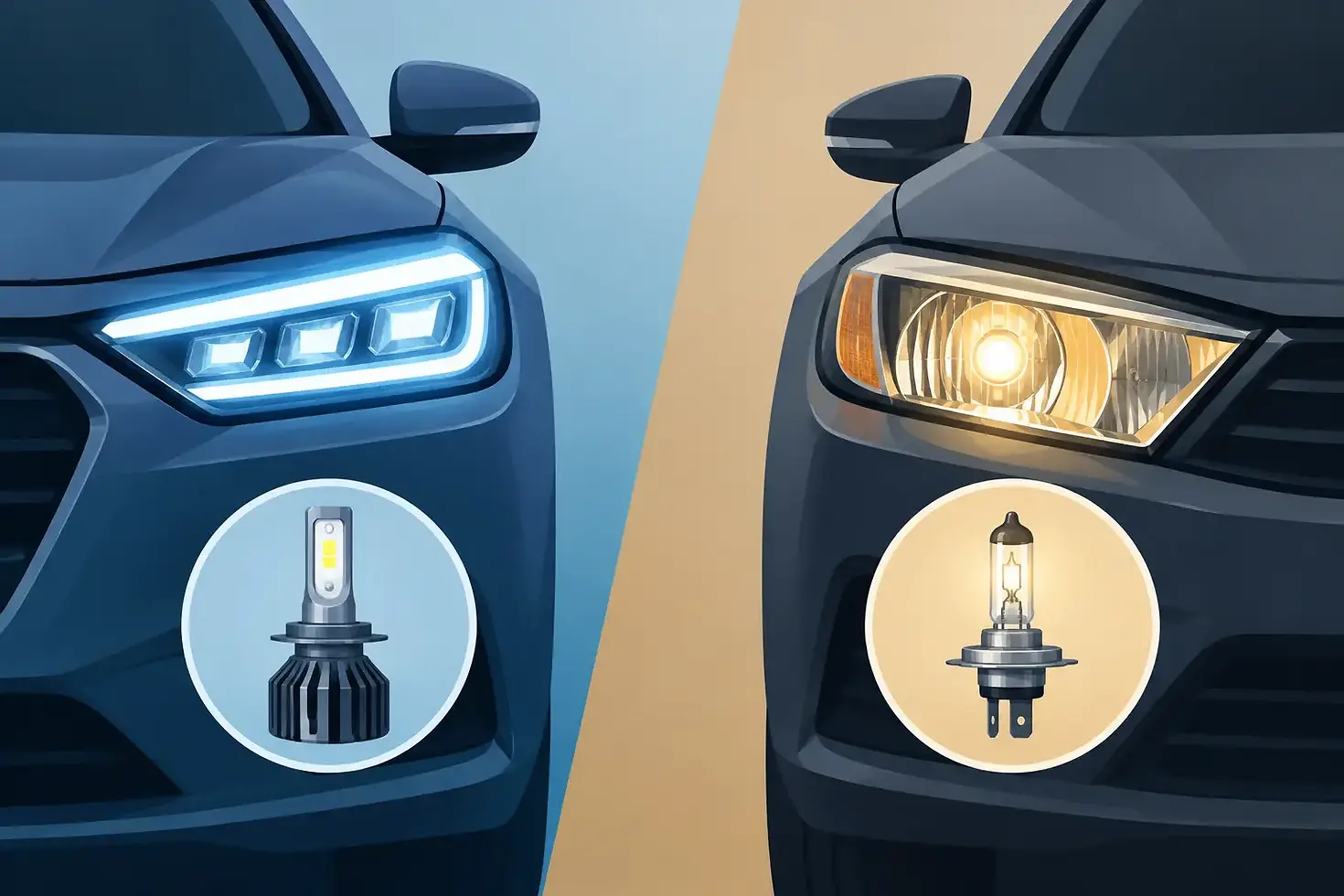
LED Versus Halogen Headlights: Which Fits You?

A headlight upgrade can change the way your car feels after dark. When comparing LED versus halogen headlights, the real question is not simply which one looks brighter in a parking lot. It is which option gives your vehicle a clean, usable beam pattern, dependable visibility in rain, and a finish that suits the way you drive.
Halogen bulbs remain common because they are simple, affordable, and compatible with many factory headlamp housings. LEDs have become the popular upgrade for drivers who want a sharper appearance, lower power draw, and longer service life. Both have a place. The right choice depends on your headlamp design, budget, driving conditions, and installation quality.
LED Versus Halogen Headlights: The Core Difference
Halogen headlights create light by heating a tungsten filament inside a bulb filled with halogen gas. It is proven technology: easy to replace, widely available, and familiar to nearly every driver. The trade-off is heat. Much of the energy used by a halogen bulb becomes heat rather than usable light, which limits efficiency and bulb life.
LED headlights use light-emitting diodes instead of a filament. They produce light more efficiently and can deliver a crisp white appearance that modernizes an older vehicle immediately. A quality LED setup can also last far longer than a standard halogen bulb, reducing the frequency of replacements.
That does not mean every LED bulb is automatically better. The headlamp housing, bulb position, heat management, and beam aim all matter. An inexpensive LED bulb installed in a reflector housing without proper alignment can create scattered glare instead of better road illumination. Bright is only useful when the light goes where it should.
Brightness Is About Beam Control, Not Just Numbers
Many drivers choose LEDs because they want more light on dark roads. That is a valid goal, especially for drivers who frequently travel on poorly lit routes, during heavy rain, or outside dense urban areas. But advertised lumen figures do not tell the full story.
Your headlights need a focused cutoff and a beam pattern that lights the road ahead without blinding oncoming traffic. Halogen bulbs are often well matched to factory reflector housings because the housing was engineered around the position of the halogen filament. Replacing that bulb with an LED that has a different light-source position can disrupt the beam pattern.
A well-designed LED bulb can closely replicate the filament position and work effectively in compatible housings. For the best result, a professional headlamp upgrade may involve proper LED projectors, improved housings, or careful beam adjustment rather than a quick bulb swap. This is where precision installation protects both your visibility and other drivers.
Color Temperature and Wet-Weather Visibility
Most halogen bulbs produce a warm yellowish light, often around 3,000K to 3,500K. LEDs commonly range from neutral white to cool white, roughly 4,300K to 6,500K. The whiter appearance of LEDs gives many vehicles a more premium, current look.
However, the coolest and bluest-looking light is not always the most practical. In rain, fog, and on reflective wet roads, extremely cool white light can feel harsher and may create more reflected glare. A neutral white LED, often around 4,300K to 5,000K, is usually a smarter balance between modern style and real-world visibility.
Lifespan, Heat, and Power Consumption
Halogen bulbs typically have a shorter life because the filament gradually weakens from repeated heating and cooling. Depending on the bulb type and driving habits, replacement may be needed every year or two. Higher-performance halogen bulbs can deliver more light, but they may sacrifice even more lifespan.
LEDs can operate for many thousands of hours when they use quality components and proper cooling. Their lower power consumption also places less demand on the vehicle’s electrical system. For cars with daytime running lights or drivers who spend many hours on the road at night, that efficiency can be meaningful over time.
Still, LEDs are not heat-free. Their heat is concentrated at the base of the bulb and must be moved away by a heat sink or cooling fan. Poorly built LED bulbs can overheat, flicker, lose output, or fail early. The fan can also become noisy or clogged in dusty conditions. Choosing a reputable product and making sure there is adequate space behind the headlamp cover are both essential.
Cost: Upfront Price Versus Long-Term Value
Halogen wins on initial cost. A replacement bulb is generally affordable, easy to source, and straightforward to install. If one bulb fails unexpectedly, halogen is often the fastest route back to safe night driving.
LEDs cost more upfront, particularly when you choose high-quality bulbs or a projector retrofit. Yet the longer lifespan, lower energy draw, and upgraded appearance can make the investment worthwhile. It is especially appealing if you plan to keep the car for several years or want a more polished look to match other exterior upgrades.
The hidden cost comes from getting the installation wrong. Cheap LEDs that cause glare, trigger warning lights, or fail within months are not a value upgrade. A proper setup may require CANbus-compatible components, dust-cap modifications, a secure mounting method, and headlight aiming. Budget for the complete job, not only the bulbs in the box.
When Halogen Is the Better Choice
Halogen is not outdated by default. It is often the right solution for drivers who want reliable factory-style performance without modifications. If your vehicle has a well-designed reflector housing and you prefer easy, low-cost maintenance, a quality halogen replacement can be the sensible choice.
It can also be the better option when an LED retrofit would not produce a controlled beam pattern. In that situation, brighter halogen bulbs or a purpose-built projector conversion may deliver safer results than forcing an LED bulb into an unsuitable housing.
Halogen light also tends to be friendlier in difficult weather for some drivers because of its warmer tone. This is not a universal rule, but it is worth considering if your regular routes involve heavy rain, fog, or poorly marked roads.
When LED Headlights Make Sense
LEDs are a strong choice when you want a modern headlight appearance, longer-lasting performance, and efficient light output. They work particularly well in vehicles designed for LED bulbs or in professionally upgraded projector systems.
For many car owners, the visual transformation is part of the appeal. A clean white beam can complement tinted windows, refreshed paintwork, custom wheels, or a more refined front-end appearance. More importantly, a properly selected LED setup can help you identify lane markings, pedestrians, road edges, and obstacles earlier at night.
If your factory headlights are cloudy, faded, or poorly aimed, replacing bulbs alone may not solve the problem. Restoring the lens, correcting the aim, or upgrading the projector can have a bigger impact. KWL Audio & Accessories approaches headlamp upgrades as a complete visibility and styling job, not just a bulb replacement.
Do Not Skip Compatibility and Aiming
Before changing headlights, confirm the correct bulb type, housing style, and available clearance behind the lamp. Some vehicles use sealed units, while others have reflector or projector housings that respond differently to LED conversions. Vehicles with bulb-out monitoring may require load resistors or CANbus decoders to prevent error messages or flickering.
After installation, aim the headlights correctly on a level surface. If the beams point too high, you may annoy or endanger oncoming drivers. If they point too low, you lose the visibility you paid for. Also check local vehicle lighting requirements before fitting colored bulbs, excessively high-output equipment, or modified housings.
A quality installation should look factory-clean: wiring secured, covers sealed against moisture, cooling components clear of obstructions, and beams tested on the road. That level of workmanship matters more than a dramatic brightness claim on a package.
Choose the Upgrade That Helps You Drive Better
For affordable, factory-compatible lighting, halogen remains dependable. For a longer-lasting, sharper-looking upgrade with strong potential for improved night visibility, LED is usually the better direction - provided the system is compatible and installed correctly.
Your headlights are not just a styling detail. They are part of how confidently you read the road, react to hazards, and enjoy every drive after sunset. Choose the light that fits your car properly, then make sure it is aimed with the same care you put into every other upgrade.


Comments