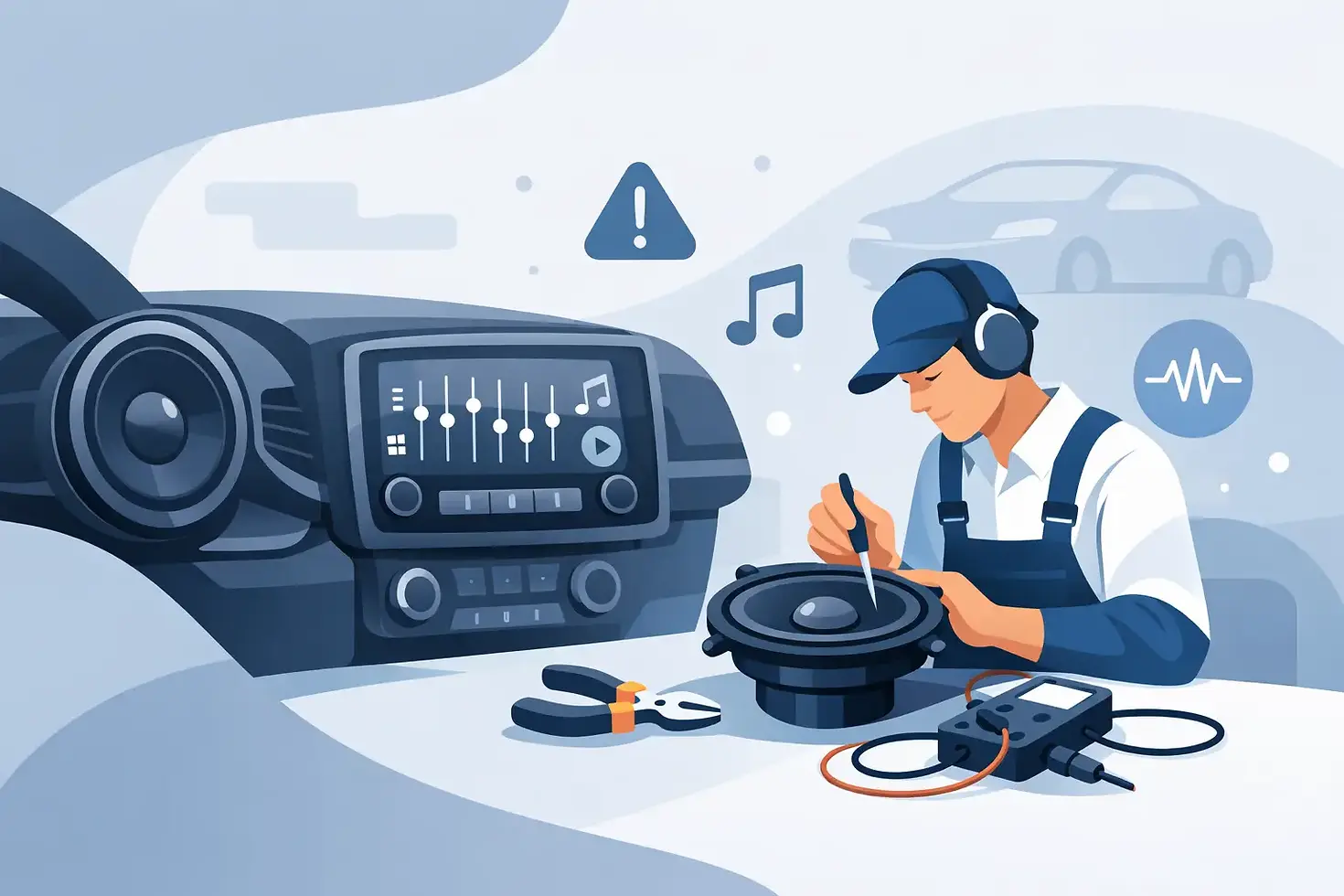
How to Repair Car Sound System Problems

A car audio problem usually starts small - one speaker cuts out, the bass gets muddy, the radio keeps restarting, or the system suddenly goes silent on the way to work. If you are searching for how to repair car sound system issues, the real goal is not just getting sound back. It is finding the actual fault before you waste money on the wrong part.
Some fixes are simple. A blown fuse, loose ground, or damaged speaker wire can shut down an otherwise healthy system. Other problems point to a failing amplifier, a head unit issue, or speakers that are already past saving. The trick is knowing what to test first so you do not turn a quick repair into a full replacement job.
How to repair car sound system without guessing
The fastest way to lose time and money is replacing parts based on a hunch. Car audio systems are connected chains. If one link fails, the symptom can show up somewhere else. A dead speaker does not always mean the speaker is bad. It could be the channel on the amp, the wiring to the door, or the head unit output.
Start with the symptom. If the whole system is dead, check power delivery first. If only one side is silent, focus on that channel and its wiring path. If the system turns on but sounds distorted, test speakers and amplifier settings before blaming the radio.
A basic inspection solves more problems than people expect. Look for blown fuses, loose battery terminals, corroded grounds, and wiring that has been pinched behind panels. Aftermarket systems especially can fail because of installation shortcuts, not because the equipment itself is poor.
If the car sound system has no power
When the head unit will not turn on at all, check the main fuse on the radio, the fuse in the car’s fuse box, and any inline fuse connected to an aftermarket power wire. A fuse that keeps blowing is a warning sign. Replacing it without finding the short only delays the next failure.
Next, confirm the ground. A weak or dirty ground can cause total power loss, random resets, or noise. Ground points should be tight, clean, and attached to bare metal. Paint, rust, and loose hardware are common causes of trouble.
If the unit still has no power, test for voltage at the constant power wire and the accessory wire. One keeps memory alive, the other tells the unit to switch on with the ignition. If either feed is missing, the radio may appear dead even when the rest of the wiring looks fine.
If the sound is on but one speaker is dead
One silent speaker usually means one of three things: a blown speaker, broken wiring, or a bad output channel. Start by adjusting balance and fade settings to isolate the problem. Then remove the door panel or access the speaker if possible and inspect the connector.
Door wiring often fails where it bends between the body and the door. That section sees constant movement, so breaks inside the insulation are not rare. A speaker can look connected but still have no signal reaching it.
If you can swap the speaker with a known working one, do it. If the replacement works, the original speaker is likely blown. If it still does not work, the problem is upstream. That could mean damaged wire, a failed crossover, or a bad amplifier channel if the system uses one.
Common faults when repairing a car sound system
Most car audio issues fall into a few predictable categories. Knowing them helps you narrow down the repair faster.
Blown speakers usually sound distorted before they die completely. You may hear crackling, harsh highs, or bass that rattles instead of hitting cleanly. This often happens when a low-powered factory speaker is pushed too hard or when the amplifier is clipping.
Bad grounding creates noise, weak output, and unstable operation. If you hear whining that changes with engine speed, grounding is one of the first things to inspect. Ground loops and poor installation work are frequent causes in upgraded systems.
Amplifier problems show up as overheating, protection mode, weak channels, or no output. Sometimes the amp is fine but the gain settings are too aggressive, the speaker load is wrong, or airflow is poor. Repair is not always about replacing the amp. It may be about correcting the setup.
Head unit faults can include frozen screens, Bluetooth dropouts, no sound from certain outputs, or random shut-offs. Factory units can also fail, especially in older vehicles where heat and age take a toll on internal components.
Distortion, static, or weak bass
When the system still plays but sounds bad, listen closely to when it happens. If distortion starts only at higher volume, the speakers may be damaged or the amplifier may be clipping. If static appears constantly, wiring or source input issues become more likely.
Weak bass is not always a subwoofer problem. Out-of-phase speakers can cancel low frequencies and make the system sound thin. This happens when positive and negative wires are reversed on one speaker. The system still plays, but the sound lacks impact.
If bass disappeared after recent work on the car, recheck every connection. A rushed installation, a disconnected RCA cable, or a loose subwoofer terminal can flatten the whole system.
Alternator whine and electrical noise
A high-pitched whine that rises with engine RPM is usually tied to grounding, cable routing, or poor shielding. Power cables and signal cables should not be run together for long distances. If they are, interference can enter the audio path.
This is one of those repairs where the cheapest fix is often the best fix. Before buying noise filters, correct the grounding and wiring layout. Filters can hide a problem, but clean installation solves it properly.
What you can safely fix yourself
If you are comfortable removing trim, testing fuses, and checking connections, there are several repairs you can handle yourself. Replacing a blown fuse, tightening a ground point, reconnecting a loose harness, or swapping a damaged speaker are all reasonable DIY jobs.
You can also inspect amplifier settings if someone turned gains too high or changed crossover points. Just avoid random adjustments. Document the original settings before touching anything, because a system that sounds worse after repair usually means setup changed without a plan.
That said, there is a point where DIY becomes expensive. If the issue involves hidden wiring faults, integrated factory electronics, CAN bus communication, or repeated fuse failures, proper diagnosis matters more than trial and error.
When professional repair is the smarter move
If your system has an aftermarket amplifier, DSP, subwoofer, Android player, steering wheel controls, or factory integration modules, repairs get more technical fast. One bad connection can affect several components at once. Professional testing can save you from replacing parts that were never faulty.
This matters even more if your car is part daily driver, part personal project. You want it sounding clean, looking right, and functioning reliably every day. A rushed repair behind the dash can create rattles, battery drain, and recurring electrical faults that cost more later.
At a full-service shop like KWL Audio & Accessories, the value is not just in swapping a component. It is in checking the full system, correcting installation issues, and making sure the repair supports long-term performance, especially for drivers around Seri Kembangan, Puchong, Bukit Jalil, and nearby areas who want one place that can handle both function and finish.
How to avoid the same car audio problem again
Once you repair the system, protect it from repeating the same failure. Do not run speakers beyond what they can handle. Do not push amplifier gains like they are volume knobs. Make sure moisture barriers inside doors are intact, because water damage ruins speakers faster than many drivers realize.
If you are upgrading parts, match them correctly. A better speaker with poor power and bad tuning can still sound disappointing. A quality amplifier installed badly can still fail early. Good audio depends on parts, wiring, tuning, and workmanship all working together.
It also helps to pay attention to small warning signs. Intermittent cutouts, occasional distortion, or a head unit that restarts once in a while are early alerts. Fixing them early is usually cheaper than waiting for a complete shutdown.
A car sound system should make every drive feel better, not leave you troubleshooting silence at a traffic light. Start with the basics, test before replacing, and if the problem runs deeper than a quick fix, get it checked properly so your next drive sounds the way it should.


Comments